
Train Where You Live. Serve Where You’re Needed.

Community hybrid programs
Community hybrid programs are a new kind of professional education at Pitt built to meet people where they are and prepare them to serve where they’re needed most.
How it works
- Coursework is delivered online by University of Pittsburgh faculty
- Hands-on, clinical, and applied training takes place at Regional Training Centers in the communities being served
- Students earn the same Pitt credentials as their on-campus peers
Why it matters
- Removes the geographic and financial barriers that have long blocked rural and underserved students from professional careers
- Addresses critical workforce shortages by training people who already live in, and are committed to, the communities being served
- Strengthens local economies by keeping talent local
Where it’s growing
The model is currently offered through the School of Dental Medicine’s Regional Training Centers, with additional programs in development. Explore current offerings below.
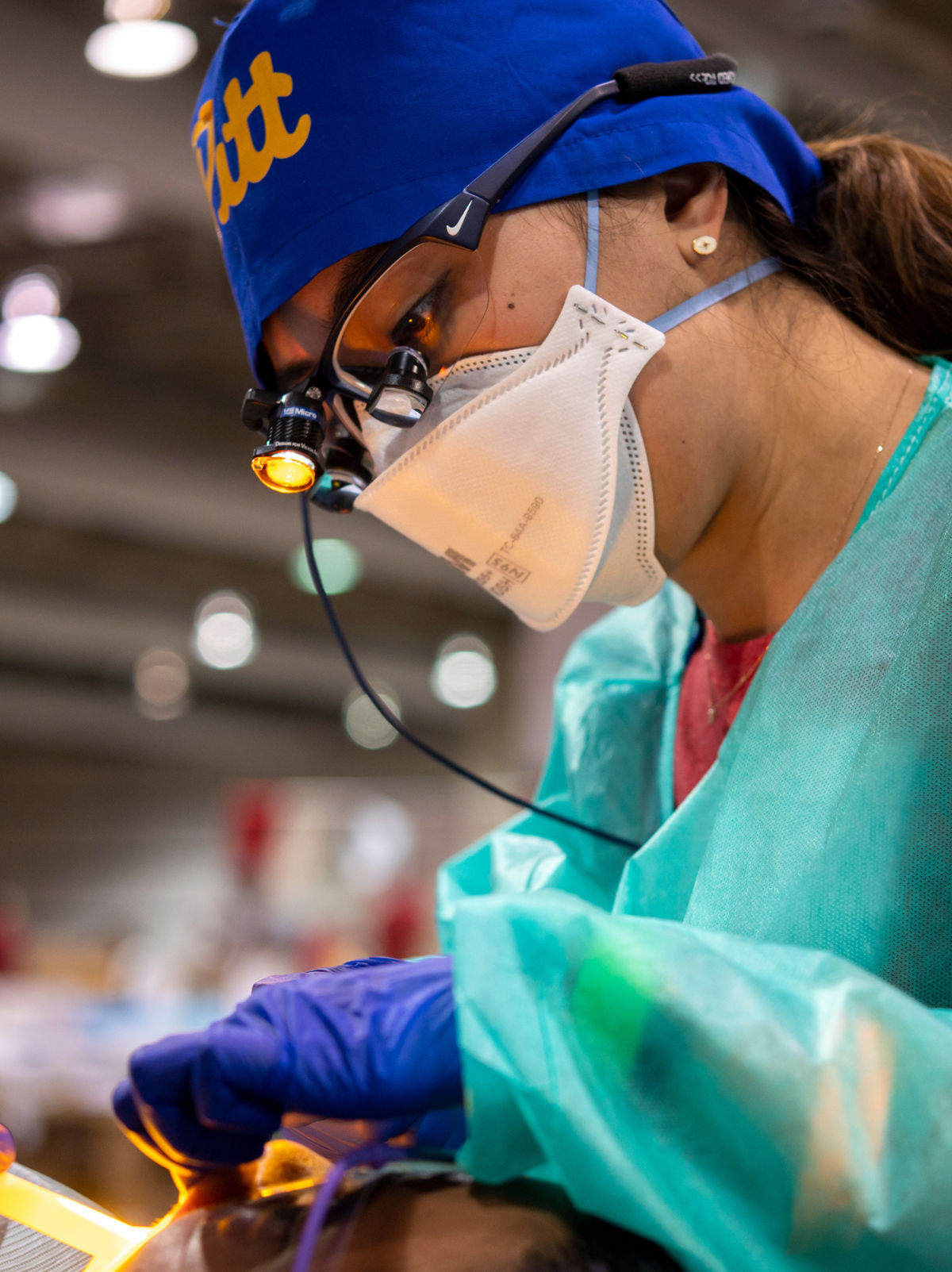
Dental Medicine Community Hybrid Programs
The University of Pittsburgh School of Dental Medicine is pioneering this model through its Regional Training Centers, a multidisciplinary initiative addressing Pennsylvania’s dental workforce crisis. With more than 3 million residents living in rural communities—the third-largest rural population in the United States—Pennsylvania sits at the epicenter of a critical shortage in dental care access.
Two initial Regional Training Centers are located in Titusville (Crawford County) and Bradford (McKean County), with additional centers planned for the coming years. These centers offer degree and certificate programs in Dental Assisting, and Dental Hygiene, providing local residents the opportunity to build healthcare careers without leaving their communities.
This initiative directly tackles a growing public health concern: inadequate access to dental care leaves rural residents vulnerable to oral health complications including tooth decay, bone loss, tooth loss, and oral cancer, as well as serious systemic health conditions such as high blood pressure, diabetes, and respiratory disease.